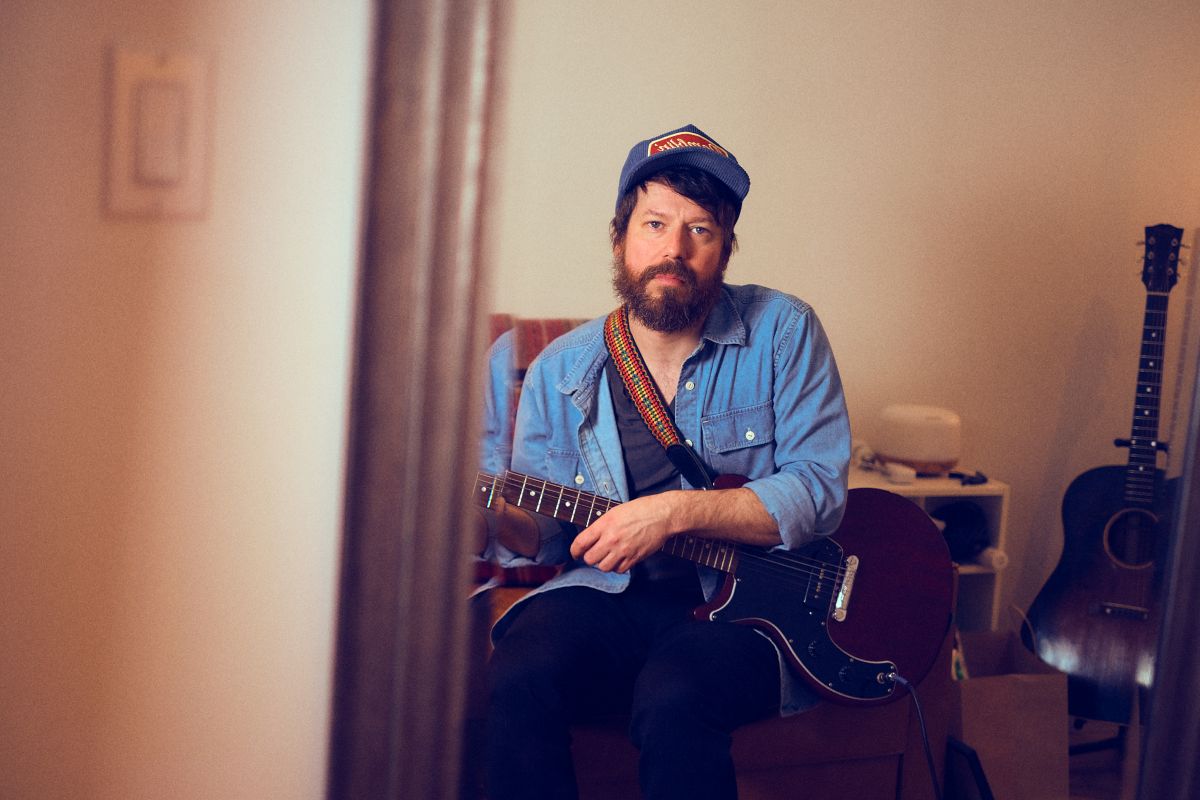
Photo credit Regina Strayhorn
Tell us about your tour vehicle. Any notable breakdown stories?
As a New Yorker with a sporadic touring schedule, I have yet to take the plunge on buying a regular touring vehicle but I’ve had good experiences with rental companies like Turo and Bandago. The last leg we went out on was a pretty twisty eight city stretch that logged roughly 3,900 miles give or take. We might’ve clipped an awning on one of our Airbnbs along the way but accountability was taken and compensation provided.
How do you eat cheaply and/or healthy while on tour?
We have several vegetarians and a vegan on board so we try to find local businesses where we can. Truth be told, Taco Bell and Wawa are both popular reasonably priced go-tos in our van.
How many strings do you break in a typical year? How much does it cost to replace them?
I switch back and forth between acoustic and electric live. I don’t have a heavy right hand or do a ton of bending so I can usually get about seven or eight shows in before changing my acoustic strings. Mercifully I haven’t really ever broken any on stage. I better knock on wood. I favor the acoustic live so the electric strings last a lot longer. I’ll only change them once or twice a year as needed. I usually use D’Addario 80/20 Bronze Lights on my Gibson J-45 which go for about seven dollars. If I’m feeling fancy, I’ll pay ten bucks and spring for the Phosphor Bronze or treat myself to a set of John Pearse.
Where do you rehearse?
Between my apartment and storage space, I already pay two rents in NYC so I don’t have a regular rehearsal space. I rely on studio rooms that book in hour blocks. Battalion is a good option in Brooklyn. It’s not too far to travel for the band and has an easy online booking interface. Sometimes I’ll go for broke and book a spot at Euphoria in the city. It’s swanky.
What was the title and a sample lyric from the first song that you wrote?
The first song I wrote was called “Waiting at the Bus Stop” and I came up with it when I was about six or seven. The main lyrical hook was “Oh, oh, waiting at the bus stop. Can’t find a new girl.” It was about a guy who gets dumped so he starts hanging out at the bus stop hoping his soulmate will arrive on the next Greyhound.
Describe your first gig.
My first gig was an open mic slot at a place called The Point in Bryn Mawr, PA. I was 15. The venue had been known as The Main Point in the 70s and hosted legendary early shows by future superstars like Springsteen and Billy Joel. I loved playing there. It was such a scene. I saw Amos Lee sing “A Change is Gonna Come” there one night before he got a record deal. It brought the house down. One time I won some studio time as a prize but I only had written one or two songs at the time so I never used it.
What was your last day job? What was your favorite day job?
My last non-music day job was cater waitering. Lord was I abysmal. I worked an event at a Montessori school in Brooklyn. They started me at the bar but after I accidentally sprayed seltzer all over a patron’s tie, I was relegated to clearing tables and picking up garbage. Some of the staff and I got trashed on free wine after the gig and ended up wailing karaoke at a bar on the Upper East Side.
How has your music-related income changed over the past 5-10 years? What do you expect it to look like 5-10 years from now?
I’ve never really been able to hang on to much of what I make through my music. I haven’t toured considerably enough to break into an echelon where it’s profitable nor have I accrued much value as a recording artist over the years. I don’t think I’ve ever even broken even on a tour or a record release before. At the risk of sounding like a downer, it seems the weather report isn’t looking great for lower to mid level touring acts these days. I notice bands cancelling tours left and right lately because the margins are too thin and the current economical state of the country doesn’t really support the art form wholesale. Tragically, I wouldn’t be surprised if you see some pretty major shifts regarding live performances for indie level artists in the next decade. I suppose that’s natural. Everything changes.
What one thing do you know now that you had wished you knew when you started your career in music?
How much time I would have to allot as a middle ager for the filming and distributing of the embarrassing brand of social media video content that is apparently required nowadays to make headway in the modern music industry. That’s been a humbling lesson to learn.