
The strongest connection between Margo Cilker and Nanci Griffith is their attention to people whose lives rarely become the subject of a song. Work brings their characters together; circumstances test how long those connections last. On Little White Cross, Cilker approaches that tradition with a particularly sobering view of American life. Griffith’s The Last of the True Believers offers a useful predecessor, showing how country arrangements and closely observed stories can give ordinary lives lasting significance.
Now

Released October 9, 2026, Little White Cross finds Cilker sharing production duties with Bruce Robison at the Bunker in Lockhart, Texas. Her originals sit alongside songs by other writers, beginning with Christy Hays’s title track. Its roadside memorial becomes the starting point for a troubled reckoning with survival. “Molly and Me” brings that concern closer to home, following a friendship formed at work into the devastating aftermath of a mass shooting. Cilker gives the story room to unfold without turning its characters into an argument.
Then
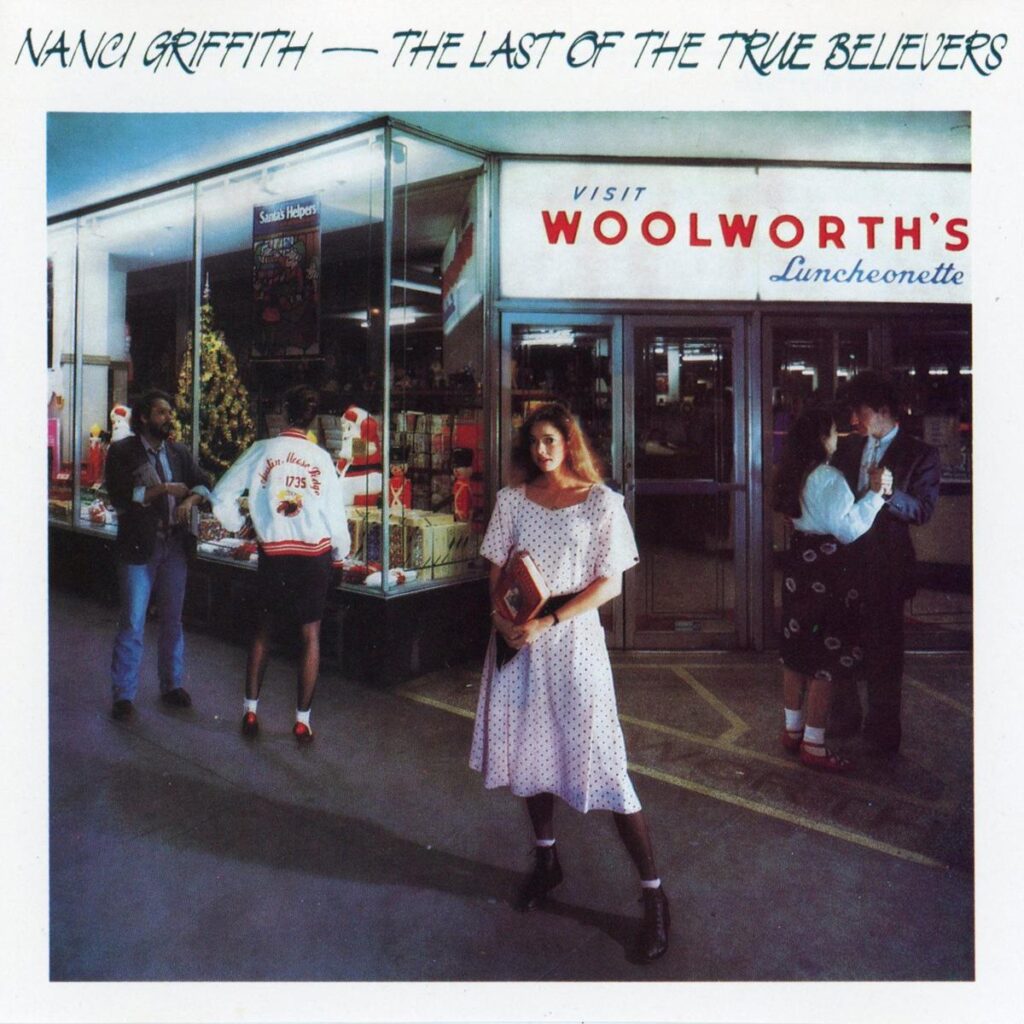
On 1986’s The Last of the True Believers, Griffith brought her folk storytelling into fuller country surroundings, working with co-producer Jim Rooney. Her bright, finely articulated singing carried an emotional seriousness that could catch listeners off guard. “Love at the Five and Dime” remains the clearest example: a store clerk and a musician build a relationship that survives disappointment. Pedal steel and acoustic instruments help establish the setting, but the song’s power rests on Griffith’s willingness to follow those people beyond their first romantic moment.
Parallels
“Love at the Five and Dime” and “Molly and Me” both begin with the social world of retail work. Each songwriter understands how a job can become the place where a consequential relationship starts. Their stories eventually move in very different directions, but both earn their emotional weight through the lives established beforehand. That shared method makes the comparison worthwhile. Cilker carries forward a country-folk tradition in which a character’s daily routine deserves as much attention as the event that changes it.
Breaks
Cilker’s lower, more conversational delivery gives these songs a different temperament from Griffith’s high, fluttering voice. The newer record also places a heavier burden on its communities. “Maryhill Peaches, Goodnoe Pairs,” written with Forrest VanTuyl, considers the labor required to sustain a life on the land. Stephanie Davis’s “Wolves” closes the album with economic hardship pressing against the possibility of neighborly kindness. Affection matters here, though it offers no easy protection.
Liner Notes
Play “Love at the Five and Dime” before “Molly and Me.” Listen to how much each song establishes before its hardest turn arrives. Griffith helped demonstrate how women’s experiences and working lives could anchor country songwriting without being simplified for it. Cilker extends that approach into a harsher present, trusting a carefully told story to make its own claim on the listener.
 About the author: Gainesville, FL area creative by day. Music is my muse. I host Twangville’s weekly Readers‘ Pick.