
Rhiannon Giddens has spent much of her career expanding the commonly told history of American folk music, particularly the role Black musicians played in shaping it. Hope Is the Thing with Feathers continues that work while emphasizing ensemble performance and songs connected to North Carolina. Odetta’s 1956 debut, Odetta Sings Ballads and Blues, offers a useful earlier reference point. Both records mix interpretation with a strong sense of ownership over the material.
Now
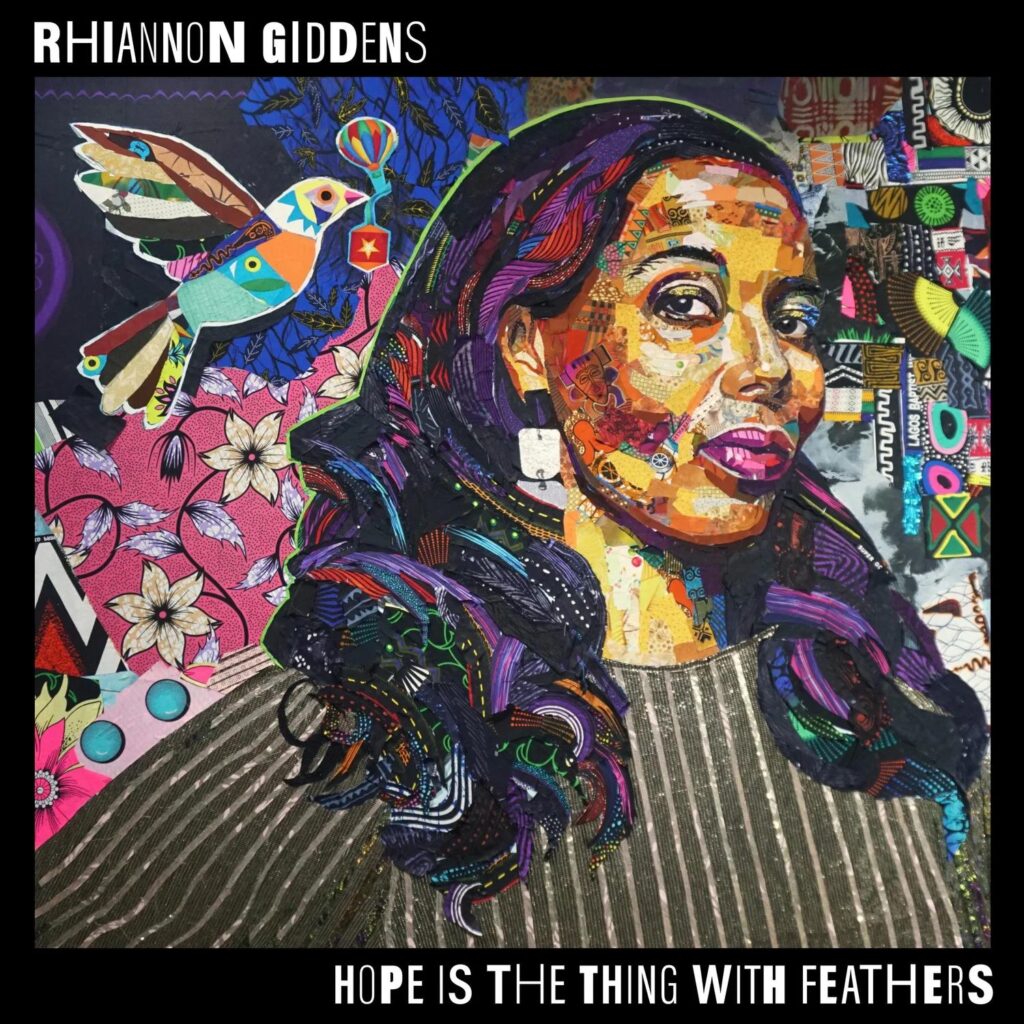
Hope Is the Thing with Feathers was recorded mostly live, with Giddens and co-producer Dirk Powell keeping overdubs to a minimum. That approach gives the album an immediate, informal sound. “Angel Fire Rise” puts Giddens’s banjo alongside Powell’s fiddle, while “Cluck Old Hen” even retains some studio chatter. Elizabeth Cotten’s “Freight Train” and Ola Belle Reed’s “High on a Mountain” appear alongside Giddens originals including “Carolina Rain.” Traditional songs and newer writing are presented as part of the same continuing repertoire.
Then
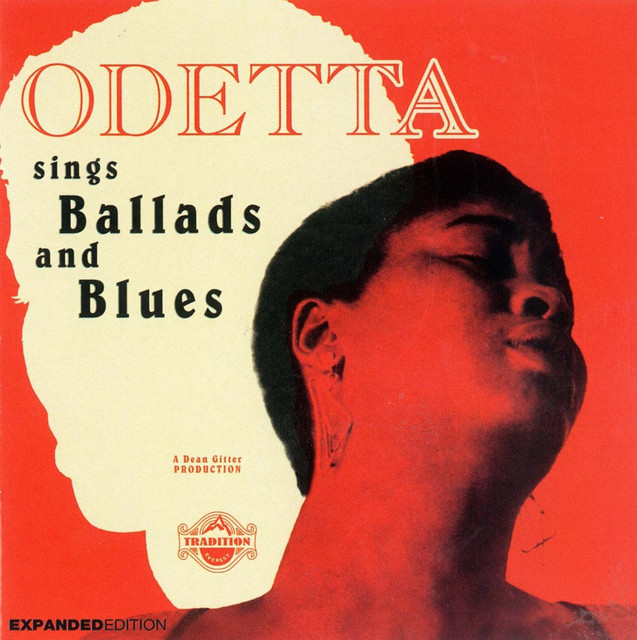
Odetta took a more stripped-down approach on Odetta Sings Ballads and Blues. Her 1956 solo debut is built primarily around her voice and acoustic guitar, drawing from traditional songs, blues and spirituals. Her version of “Another Man Done Gone” shows how little accompaniment she needed to establish the weight of a song. Elsewhere, her guitar often serves a rhythmic role and leaves plenty of room for her contralto. The album also helped establish Odetta as a major figure in the folk revival that followed.
Parallels
The strongest connection is in how each singer approaches traditional material. Neither treats interpretation as an exercise in preservation. Odetta moves through songs including “Muleskinner Blues” and “God’s Gonna Cut You Down” without worrying much about separating folk, blues and spiritual traditions. Giddens works from a similarly broad understanding of American roots music. Her versions of “Freight Train” and “High on a Mountain” respect their sources while fitting naturally with her own songs. In both cases, the singer’s choices of phrasing and arrangement make familiar material personal.
Breaks
The biggest difference is musical scale. Odetta Sings Ballads and Blues depends almost entirely on one performer, while Hope Is the Thing with Feathers emphasizes interaction among musicians. Niwel Tsumbu’s guitar, Francesco Turrisi’s accordion and Powell’s instrumental contributions give Giddens more arrangement options. Her sister Lalenja Harrington also joins her on “Walk with Me.” Giddens additionally places original songs directly beside older material, allowing subjects such as the refugee crisis in “Wish in Vain” to sit within the same musical framework as traditional songs.
Liner Notes
Odetta and Giddens come from different periods of the folk tradition, but their records share a clear principle: old songs remain useful when performers are free to interpret them. Odetta Sings Ballads and Blues demonstrated how much authority a singer could bring to traditional material with little more than voice and guitar. Hope Is the Thing with Feathers applies this freedom to a broader ensemble setting. Giddens adds her own songs and arrangements to the tradition.
 About the author: Gainesville, FL area creative by day. Music is my muse. I host Twangville’s weekly Readers‘ Pick.