
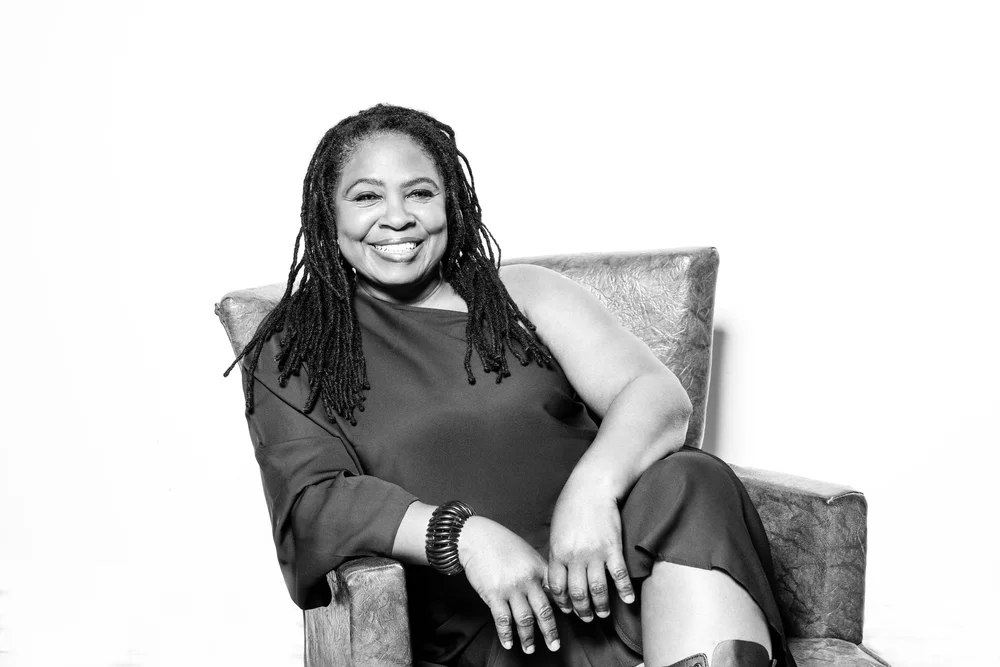
Photo Courtesy Big Feat PR
For Ruthie Foster, the road to music began with a child’s stubborn curiosity: sitting close to the television, trying to convince her siblings that the Grammy Awards mattered.
She watched singers like Janis Ian and Roberta Flack step into the light and sensed something larger than fame. Music was not merely a dream. It was a way out, a way forward, a place where a person could carry every scar and still make something beautiful.
Years later, Foster stood on that same stage, winning a Grammy for Best Contemporary Blues Album for Mileage. The honor did not arrive like lightning. It came after decades of miles, setbacks, reinvention, and the stubborn faith required to keep answering the call.
Her new album, Just Say Yes, is the sound of an artist taking inventory — of family, faith, loss, survival, and the strange turns that shape a life.
Foster has always known something about starting over.
After serving in the U.S. Navy and pursuing a major-label opportunity, she stepped away from music in 1993 to care for her ailing mother. After her mother’s death, she faced the silence that follows a life-changing loss. The answer was not to reclaim the past. It was to build again.
The phrase that guided her was simple: “Just say yes.”
“It’s just three little letters,” Foster says. “And that has changed my life.”
She wrote those words on a small Post-it note and placed it on her computer as a reminder to accept possibility. She still carries it, though the adhesive long ago gave up and tape now holds it in place.
At the time, Foster worked production jobs at television and cable stations while trying to return to music. She spent lunch breaks performing at nursing homes, giving her voice away before the world ever paid her for it.
“I just needed to be around these old people for a little bit and hear stories,” she says. “And get them to stand up and shake a groove.”
Those small moments became coffee shops, local stages, a band, and eventually a career. It was not luck. It was labor.
“It wasn’t magic,” Foster says. “It was a lot of work, a lot of dedication.”
That work began in East Texas, where Foster grew up among fields, family, and a stubborn abundance of music.
“I grew up in the country,” she says. “I come from a farming family where we grew tomatoes in the summer and picked tomatoes.”
She remembers working acres of crops alongside cousins, sometimes 15 family members together, gathering harvests under the Texas sun.
The sounds around her were just as varied: country music from old pickup trucks, gospel on Sunday mornings, Tejano, Cajun, and the Czech and German traditions woven through Central Texas.
“Something about being in Texas, you get that mix,” Foster says.
But gospel was the foundation. Her grandmother’s brothers sang and played piano in church, and one childhood memory never left her: watching her uncle sing a spiritual and seeing the room transform.
“When he started singing, the energy in the room changed,” she says. “I just remember thinking, ‘Ooh, I want to be able to do that one day.’”
Her mother’s records — Aretha Franklin, Mahalia Jackson, Andre Crouch, Shirley Caesar — became another inheritance. During her mother’s final illness, Foster discovered the gift of knowing her not just as a parent, but as a person.
“It’s good to know them as just another human being,” she says. “They’re not just your parent.”
That sense of gratitude runs through Just Say Yes. The album emerged after Foster suffered a serious knee injury that forced her to stop touring. What first appeared as an interruption became a revelation.
“I had to stop and slow down,” she says.
The pause allowed her to spend time with her daughter and her 86-year-old father in East Texas, watching Westerns, sitting on the porch, and returning to the quiet places where memory lives.
Recorded in Nashville with producer Tyler Bryant, Rebecca Lovell and Megan Lovell of Larkin Poe, Mike Seal, and a circle of trusted musicians, the album carries the warmth of a gathering rather than a studio session.
“It was really a family affair,” Foster says.
Songs such as “Take Time” and “Thank You” reflect her belief that obstacles often arrive disguised as teachers. Her gratitude is not a slogan. It is a daily discipline.
“That’s the first thing I say, getting my feet on the ground,” she says. “I didn’t have to wake up.”
Foster begins her mornings in prayer, in what she calls her “home base,” before letting the world rush in.
For an artist shaped by blues, gospel, soul, folk, and country, Just Say Yes is not a departure. It is a return — to the people, places, and truths that built her.
The girl watching the Grammys from a living room eventually found herself on that stage. The woman carrying a worn Post-it note learned that saying yes is not about chasing every road.
It is about recognizing the right one when it appears.
 About the author: A devout lover of singer-songwriters, mountain hikes, colorful cuisine, and eccentric artists, Brian D'Ambrosio lives in Santa Fe, New Mexico. For story ideas and suggestions, he may be reached at dambrosiobrian@hotmail.com.