
Editor’s Note: We invited Nashville artist and blues devotee Sophie Gault to dig into Ma Rainey’s Paramount recordings, arriving as a new box set on July 24.
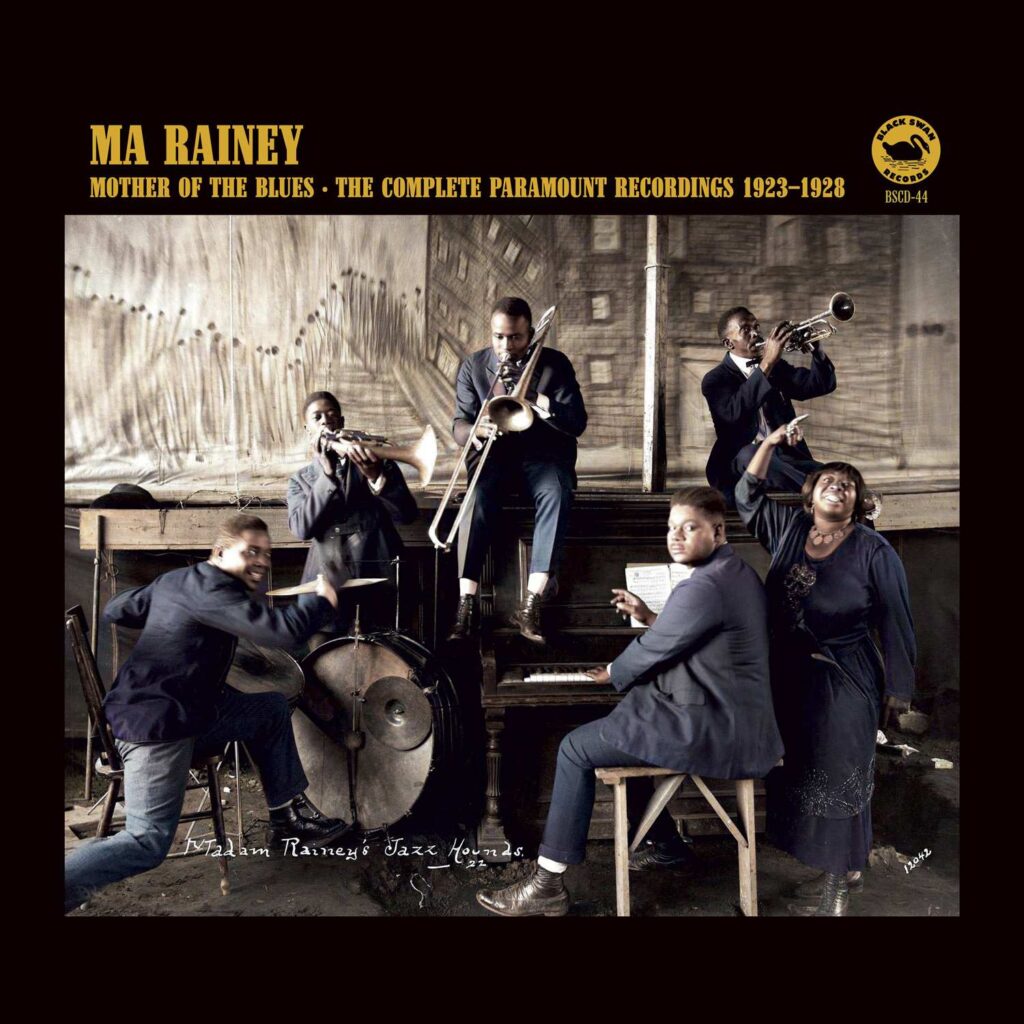
Sitting in the kitchen one summer night, you hear the sound of a muted trumpet leading into a song. It’s accompanied by a slight lingering static. While listening, something strange happens–You fall headfirst through the Bluetooth speaker and slip away through time, arriving in the era of vaudeville, moonshine, and race records.
You’ve landed in a traveling tent show, surrounded by canvas and chatter. A lone raspy and quivering voice enters the scene, cutting through the crowd: Ma Rainey, the Mother of the Blues.
Booming and melancholy, she starts,
“Hey people, listen while I spread my news
Hey people, listen while I spread my news
I wanna tell you people all about my bad luck blues”
The arrow of the rasp digs in a little deeper and pierces the air in front of you:
“What’s the use of living if you can’t get the man you love
What’s the use of living if you can’t get the man you love
You might as well go die, give your soul to the Maker above.”
Long before anyone called it rock ’n’ roll, Ma Rainey embodied its spirit. Sex? Getting drunk to forget? Heartbreak? Jail? She had it all, with a grin on her face and gold teeth flashing. More than any of that, she seemed to understand intuitively that commanding respect was part of the art itself. And that, to me, is what rock ’n’ roll has always been about: strength, command, and using your own voice as your power.
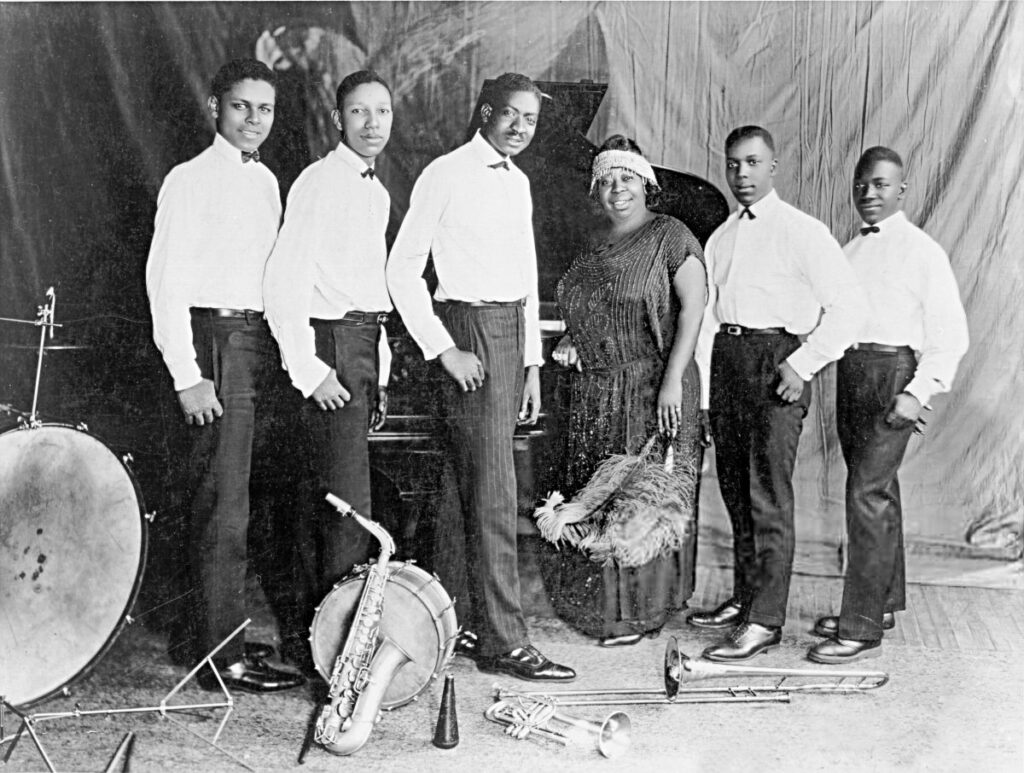
Rainey emerged from the Black tent shows and vaudeville circuits that evolved alongside the complicated legacy of minstrelsy—where Black performers often had to navigate entertainment traditions rooted in caricature while creating work of raw honesty and originality. That tension runs beneath these recordings, but Rainey’s ownership and defies any stereotype.
It hardly sounds as though she is singing into a microphone. Rather, she seems to be projecting over the room. Her years on the vaudeville and tent-show circuit demanded enormous projection in an era before PA systems. Against slide guitar, banjo, piano, and horns—a band that never overwhelms her—you hear life, joy, grief, sexuality, humor, and survival presented with pride.The recordings themselves demand a little patience. The surface noise and primitive recording technology don’t always surrender every lyric on the first listen. But if you lean in, it’s easy to imagine what it would’ve sounded like in person.
Back in the tent, you keep watching, mesmerized. The woman singing is wearing a sequined dress trimmed with ostrich plumes, a necklace made of coins, and a diamond tiara. She sings,
“They say I do it, ain’t nobody caught me
Sure got to prove it on me
Went out last night with a crowd of my friends
They must’ve been women, ‘cause I don’t like no men…”
Yes, you heard the lyrics correctly.
In 1925, Rainey was arrested after police raided an “indecent” party at her home in Chicago attended by women. It was Bessie Smith, her younger protégé, who reportedly posted bail. The incident, along with the suggestive and gender defying lyrics of “Prove It on Me Blues,” has contributed to her legacy as one of the earliest major recording artists associated with queer expression. It is just another example of how completely unapologetically she owned who she was.
Listening to these complete Paramount recordings from 1923–1928 is to hear an artist who was already fully formed. Paramount, it’s worth noting, became one of the most important labels documenting the early blues. The company began in Wisconsin as a manufacturer of wooden furniture before becoming one of the defining record labels of the 1920s.
A astute business woman who negotiated fair payment and earned the reputation of being demanding, Rainey was helping define the recorded blues long before some of the genre’s most celebrated male figures ever entered a studio. For reference, Robert Johnson’s recordings were not made until 1936 and 1937, and Charley Patton’s first recordings came in 1929.
It’s impossible to hear these recordings without thinking about what followed. Within a generation, many white performers would build enormous fortunes performing music rooted in the traditions pioneered by artists like Rainey, while many of the Black musicians who laid the foundation received comparatively little financial security or historical recognition. That history deepens the meaning of these songs, which amount to nearly one hundred recordings in just five years—an astonishing body of work for the era.
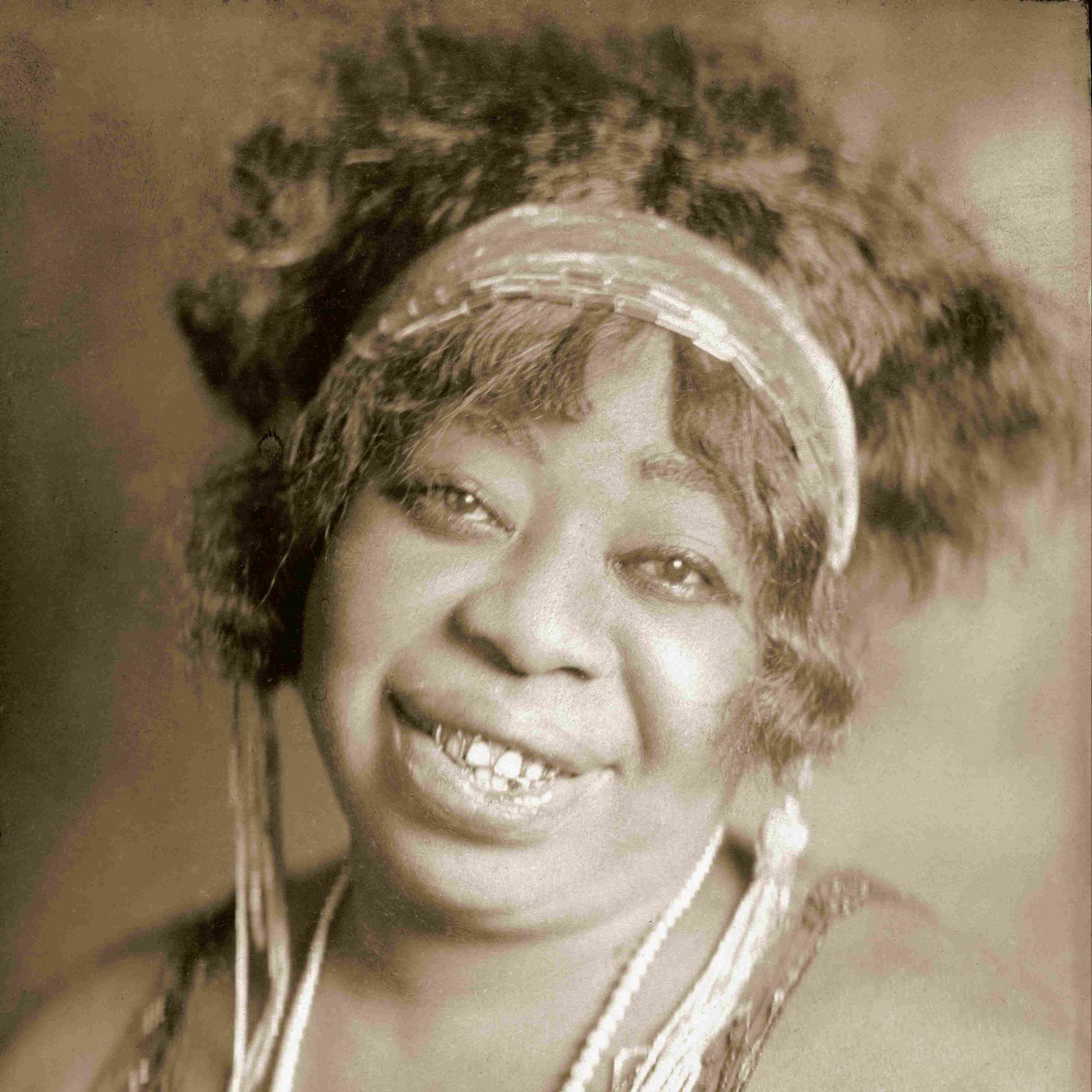
There’s a sadness in knowing that this woman who helped shape American music was reportedly listed on her death certificate as a “housekeeping.” Whether that reflected bureaucracy, prejudice, or simply the circumstances of her later life, it serves as a reminder of how easily history can overlook its architects.
Yet this collection refuses to let that happen. These recordings restore Ma Rainey to the center of the story: the Mother of the Blues. One of American music’s defining voices.
Slowly, the canvas begins to dissolve. The chatter fades into static. The trumpet grows distant. Ma Rainey’s quivering voice, once booming across the tent, now gently guides you back the way you came. You tumble through time once more, falling backward through the Bluetooth speaker until you find yourself standing in your kitchen exactly where you started.
It was all a dream.
Or was it?
You pour yourself a drink just as her voice drifts out of the speaker one last time:
“Had a dream last night and the night before
Had a dream last night and the night before
Gonna get drunk now, I won’t dream no more.”
The static disappears. The music ends. Nearly a century has passed, yet the distance between her world and ours suddenly feels so small. That is the miracle of these recordings. They don’t simply preserve history— they collapse it. A hundred years later, the sound of the truth is still alive. Here’s hoping we have the good sense to keep listening for another hundred.
Sophie Gault is a Nashville-based artist whose new album, Unhinged, was released earlier this year. A devoted student of the blues, she channels that lineage into songs built on grit, feel, and attitude — raw riffs that snarl and bite, lyrics that don’t flinch from hard truths. Gault is on tour this summer and fall, with a stop in New York City on July 19 for a Twangville show at Groove alongside Eric Ambel.
 About the author: To change this standard text, you have to enter some information about your self in the Dashboard -> Users -> Your Profile box.