
If the Ryman is the mother church of country music, North Hollywood’s Palomino was its tent revival/medicine show cousin–a lot more raucous, less bound to tradition, but with no less passion about its spiritual foundation. I had the good fortune last week to attend a private screening of the soon-to-be-released documentary, simply called The Palomino, about the iconic establishment. Written by KP Hawthorn (The HawtThorns) and directed by Adrienne Isom (Nocona), the movie tracks the club history from its opening in the late 40’s to its untimely demise in the early 90’s.
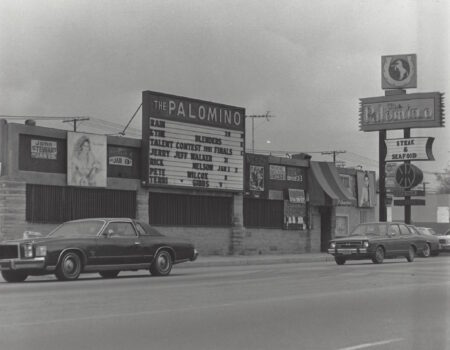
The club opened in 1949 as a showcase for owner Hank Penny’s western swing band and a place where west coast jazz musicians could come to jam. After a few years he sold it to a trio of LA transplants, including brothers Billy and Tommy Thomas, who later bought out their partner. The Thomas’ had a knack for running the place, and an eye for up and coming talent. That included an early embrace of the rough-around-the-edges Bakersfield sound, a counterpoint to the increasingly polished music coming out of Nashville. Some of the acts gracing the Palomino’s stage in that era included The Maddox Brothers And Rose, Buck Owens, and Merle Haggard, as well as crossover artists like Jerry Lee Lewis.
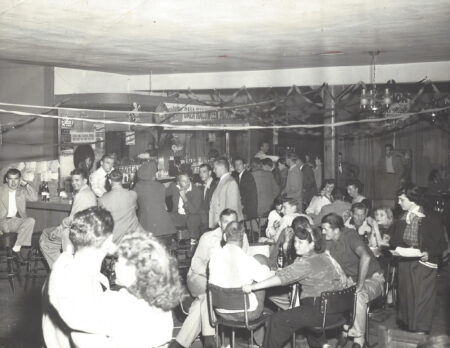
By the mid-sixties musicians from the nearby enclave of Laurel Canyon were coming to see music and absorb the atmosphere of the Palomino. Despite the potential cultural clash of the crewcut San Fernando Valley crowd, the long-haired hippies from Hollywood, stunt men from movie studio lots a few miles away, and roughnecks from the Kern County oil patch on the other side of the San Gabriel Mountains, there was an embrace of the new music the Thomas brothers were showcasing. That openness resulted in the first public performances by eventual legends The Flying Burrito Brothers, Linda Rondstadt, and, in her country music debut, Emmylou Harris.
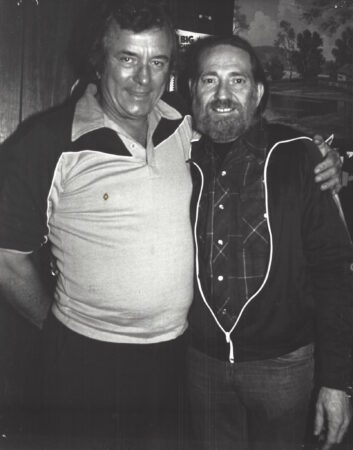
At this point in the club’s history it had become the go-to place for musicians to hang out, and rock and roll acts like The Pretenders and Elvis Costello started booking gigs there. Drop-in guest performers included Bob Dylan, George Harrison, and Elton John. This ever-widening embrace of musical styles made it a natural home for what became the cowpunk scene, with performances by The Blasters, Lone Justice, The Long Ryders, and Rosie Flores. Outlaw country acts like Lucinda Williams and Dwight Yoakum also got their start, and record deals, after playing the Palomino stage.
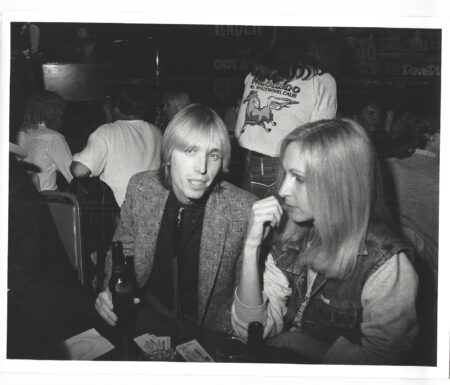
When the Thomas brothers passed away within a few years of each other (Billy in 1979, Tommy in 1985) the club passed on to Tommy’s 2nd wife, who turned it over to her son to run. Without the institutional knowledge of long-time employees and original family members, and a shunning of the club’s regulars, the Palomino began to suffer economic woes and slid into a death spiral with it finally closing in 1995.
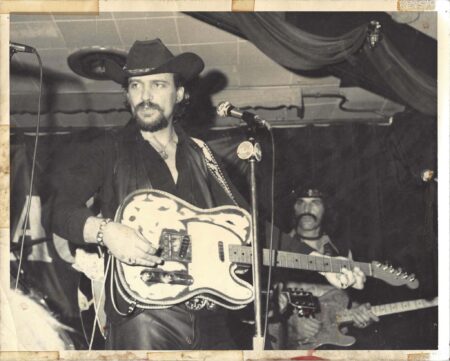
Probably no club in the world has more influenced the image that comes to mind when you say “honky-tonk” than the Palomino. The twang of the early Telecasters from Leo Fender’s nearby factory were a mainstay of the artists playing at the North Hollywood institution. Nudie Cohn, a Palomino regular, outfitted many of the performers there with his legendary suits. Nearly a dozen movies and TV episodes were shot there, including scenes of Clint Eastwood in Every Which Way But Loose, and Burt Reynolds in Hooper. Because it was out of tune, Jerry Lee Lewis once kicked a piano off the stage where it smashed on the floor. Tiny, one of the iconic bouncers, took an arrow in the arm one night from a patron unhappy with being kicked out.
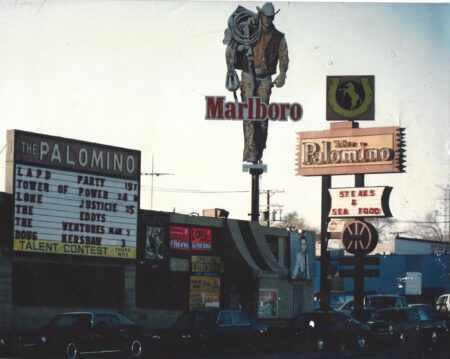
Those kind of stories, of which there are many, are told in the movie along with interviews with many of the famous performers noted above. It’s all tied together with additional interviews from the employees, staff musicians, and original family members who were there for most of it. There’s another round of investment needed to get the movie over the distribution finish line and hopefully these private screenings will accelerate that. When it does, if you have any interest in the history of country music, run, don’t walk, to see The Palomino.
 About the author: I've actually driven from Tehatchapee to Tonopah. And I've seen Dallas from a DC-9 at night.