
Whitehorse have always made tension sound like a room two people refuse to leave. On All I Want Is All of It, Luke Doucet and Melissa McClelland return to early folk-rock romanticism with the mileage of a long musical and marital partnership, recorded with a ragged, farmhouse-studio looseness that lets the floorboards speak up too. The “Then” that helps frame it is The Civil Wars’ Barton Hollow, a 2011 touchstone for modern male-female roots duos built on intimacy, friction, and the dangerous sport of singing very close together.
Now

All I Want Is All of It arrives as Whitehorse’s most homeward-looking record in a while, less interested in costume changes than in the complicated weather of staying. The first single, “See the Light,” reportedly takes inspiration from an anglerfish-shaped internet tragedy, which is about as Whitehorse as it gets: romance, dread, a strange creature from the deep. The album leans into one-take energy, gravel-road ambience, birds, and Great Lakes industrial clank, with “Lighthouse” even retaining demo-recording immediacy.
Then
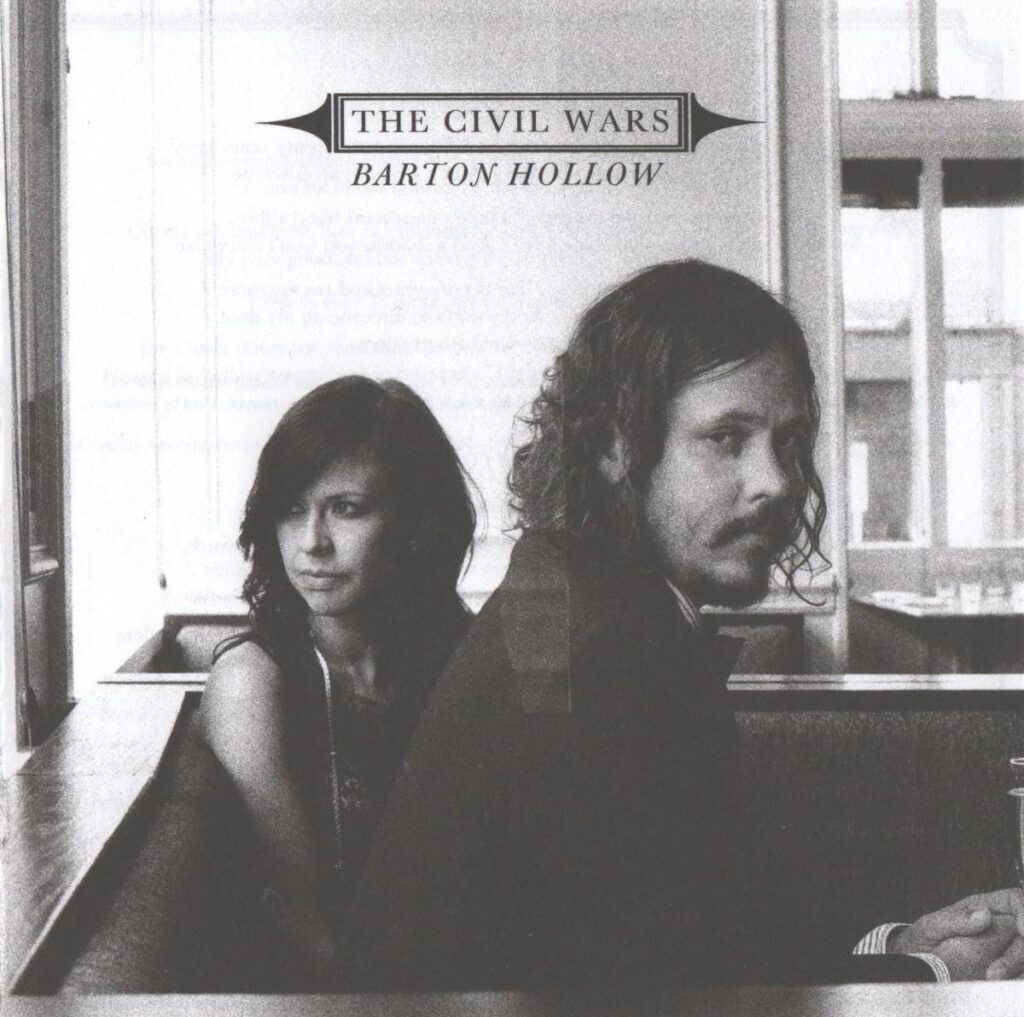
The Civil Wars’ Barton Hollow made a small sound feel large by trusting the voltage between Joy Williams and John Paul White. The record’s title track kicked dust like a murder ballad with clean shoes, while songs such as “20 Years” and “Poison & Wine” let restraint do the heavy lifting. Its production favored breath, acoustic pressure, and close-harmony drama, reminding the early 2010s roots boom that a duet could feel less like agreement than a beautifully managed argument.
Parallels
Both albums understand the duet as a pressure system. Whitehorse and The Civil Wars use harmony not simply to sweeten the melody, but to complicate it, turning attraction into dialogue and dialogue into a little trial by fire. Barton Hollow helped prove there was modern room for folk-rooted duo records that carried old shadows without cosplay. All I Want Is All of It picks up that thread from the other end of the road, after years of partnership, parenthood, cities, bands, tours, and the necessary humility of still choosing the song.
Breaks
The big difference is temperature. Barton Hollow often feels candlelit and sealed off, like every whispered line might break the glass. Whitehorse are earthier and more restless here, letting the outside world leak into the take. They have also lived publicly through more stylistic turns, from bluesy noir to glossy pop detours, so the return to folk-rock roots carries a different charge. The Civil Wars sounded like discovery. Whitehorse sound like recognition, which is quieter until it hits harder.
Liner Notes
This comparison is fair because both records sit where Americana, folk-rock, and close-harmony adult reckoning meet, but it is more lineage than mirror image. Barton Hollow cleared space for the idea that two voices could carry an entire emotional architecture. All I Want Is All of It answers with the sturdier, messier version: the house is still standing, the pipes knock, someone left the window open, and the singers know exactly which boards creak.
 About the author: Gainesville, FL area creative by day. Music is my muse. I host Twangville’s weekly Readers‘ Pick.