
Some records announce themselves with a bang. Vincent Neil Emerson’s Blue Stars does something tougher. It settles in, tells the truth, and lets the weight of the songs do the heavy lifting. That makes it a natural fit beside Guy Clark’s Old No. 1, a record that helped define how Texas songwriting could be plain, precise, and quietly devastating. Beyond sound or geography, the connection is a shared belief that the smallest details often carry the biggest truths.
Now
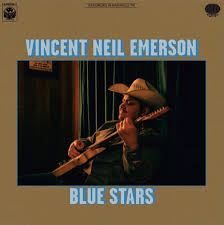
Blue Stars is Emerson tightening the screws without losing the porch swing. The record is deeply personal, rooted in childhood, family, long drives across Texas, and the discipline of writing from lived experience instead of chasing genre fashion. Even when the palette widens, it stays song-first: “Dark Horse” works like a mission statement for a career built outside the hype cycle, while “Louisiana Wind,” “See My Pony Run,” and “Chippin’ At The Stone” show a record willing to add horns, fuzzy guitar, and rhythmic lift when the writing asks for it.
Then
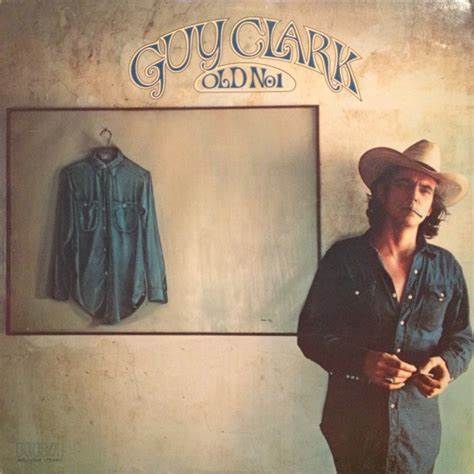
Old No. 1 arrived in 1975 and quietly drew the map for a lot of Texas and Nashville songwriters who wanted country music to sound like actual people again. Clark’s debut carried landmark songs such as “L.A. Freeway,” “That Old Time Feeling,” “She Ain’t Goin’ Nowhere,” and “Desperados Waiting for a Train,” and its power came from precision rather than flash: conversational phrasing, lived-in detail, and arrangements that never crowded the lyric. The album did not need to kick the saloon door open. It just walked in, took the good chair, and made everybody else write better.
Parallels
The line between these records is the Texas writer’s trick of making autobiography sound communal. Clark could sketch a whole life with one offhand image, and Emerson works the same side of the street, turning roads, work, ancestry, and memory into songs that feel overheard rather than manufactured. Both records trust the unforced vocal. Neither singer performs “importance.” They let the grain in the voice do the work, then back it with arrangements that are sturdy, tasteful, and alert to mood. That is why Blue Stars understands that the most durable country records are built from observation, restraint, and one killer line after another.
Breaks
Blue Stars is more musically expansive than Old No. 1, with a broader band feel and a few tonal swerves Clark likely would have trimmed back. Emerson also writes from a later vantage point, where identity, Native heritage, recovery, and the modern independent-country grind sit closer to the surface. Clark’s debut had the calm assurance of a master carpenter showing you the joints. Emerson’s record has more weather on it. Same trade, different storms.
Liner Notes
If Old No. 1 helped establish the standard for literate, vernacular-rich Texas country, Blue Stars shows that standard still has mileage left. Emerson does not imitate Guy Clark’s posture, tempo, or phrasing. He inherits the deeper thing: the belief that a country song can be modest in sound, exact in detail, and big as a life. That is the reach of Old No. 1. Fifty years later, somebody is still driving under that sign, writing songs that know where they came from.
 About the author: Gainesville, FL area creative by day. Music is my muse. I host Twangville’s weekly Readers‘ Pick.