
There’s a certain kind of roots record that doesn’t want to be reviewed so much as spilled.
You know the type: beer-ring on the lyric sheet, boot-scuff on the melody, a chorus built to survive a room full of people talking over it until they suddenly aren’t.
Clay Street Unit’s debut Sin & Squalor shows up with that exact energy, like it’s late, it’s loud, and it brought its own drummer.
Now
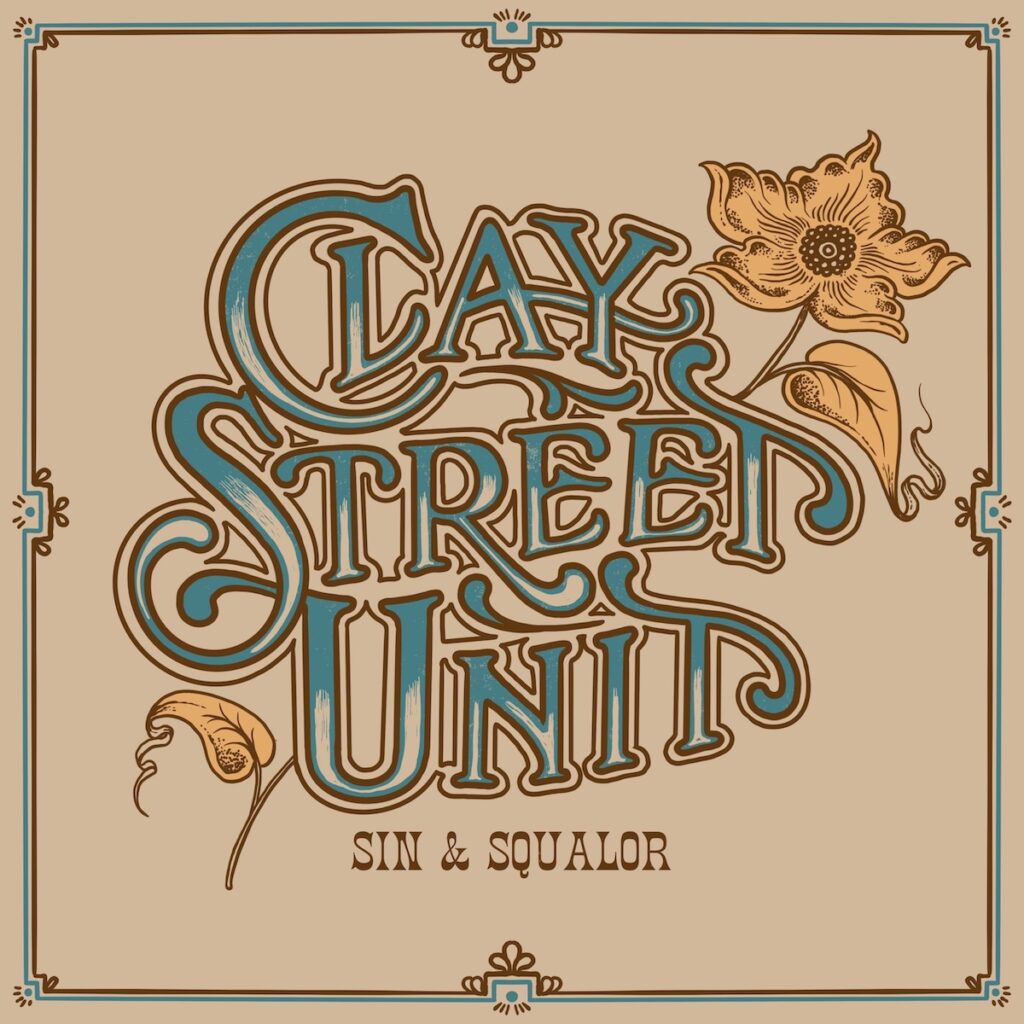
Sin & Squalor is an 11-song debut (released Feb. 13, 2026 on Leo33) produced by Chris Pandolfi of The Infamous Stringdusters, and it’s built to feel like a live band with real momentum, not a carefully pinned butterfly of “Americana vibes.”
Clay Street Unit’s calling card is the blend: bluegrass bones (mandolin, banjo) with a pedal steel and full kit pushing the air around. That drummer matters. It turns “tight picking” into “forward motion.” The Bluegrass Situation even frames the record as a snapshot of where “jamgrass” sits now, and you can hear it in how the arrangements let each instrument take a lap without losing the plot.
Song-level, they cover a lot of ground without feeling scattered: the yearning-road ache of “Drive,” the quick-heat urgency of “Where Have You Gone?,” the sermon-turned-stomper “One Last Time,” and the Ramblin’-style snap of “Freightline Blues.” “Choctaw County” brings in Lindsay Lou, and that duet shifts the room lighting for a few minutes, like someone dimmed the bulbs so the story could land softer.
Also, the title track’s premise as described in reviews is sneakily tender: “sin and squalor” as the outside label, not the inside truth. Love makes the cheap parts livable.
Then
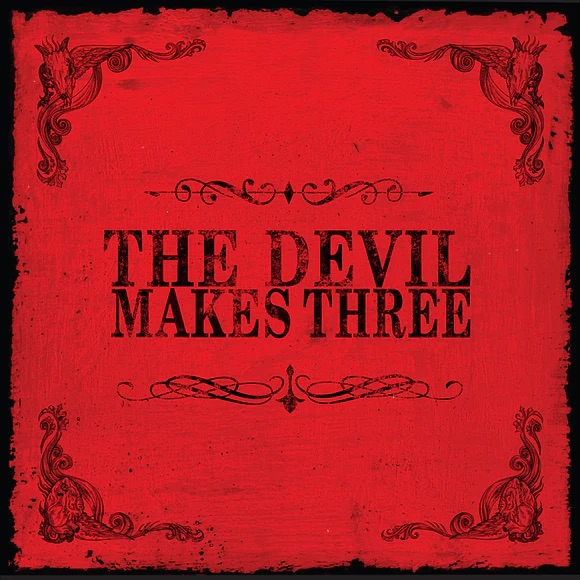
The Devil Makes Three’s self-titled debut (2002) is one of the early modern templates for “roots music that’s willing to be a little feral.”
It’s a trio record that borrows from old-time, country, and blues, but carries itself with punk posture: direct, unpolished, and unbothered by whether the room considers it “traditional.” The band’s own history and bios talk openly about that genre-collision DNA, and the songs lean into vices and consequences with a grin that still has bruises on it.
If you need one neon sign from that album: “Old Number Seven,” a whiskey-ragtime sprint that helped normalize the idea that a string band could feel dangerous and danceable at the same time.
Parallels
Party-first roots music (with craft hiding under the grin)
Clay Street Unit has an “onstage, throw a party” mission statement, and Sin & Squalor keeps that promise in the studio. The Devil Makes Three did the same thing two decades earlier, just with fewer inputs and more splinters. Both records understand the ancient truth: you can sneak hard feelings into a room if the rhythm’s good enough.
Songs about sin that aren’t actually about sin
Despite the titles, neither album is selling cheap shock. Clay Street Unit’s “Let’s Get Stoned” gets framed as ritual and modest gratitude, not an escape hatch. The Devil Makes Three built a whole early identity around vice narratives that read like old folk warnings told by the guy who definitely ignored the warning. That tension between trouble and tenderness is the lineage.
Breaks
Modern horsepower vs. back-porch weaponry
Clay Street Unit’s big difference is the band architecture: pedal steel, drums, and a producer who knows how to capture ensemble energy without sanding off the bark. The Devil Makes Three’s debut is more like three people in a circle daring each other to play faster. The newer record blooms; the older one snaps.
Geography as montage vs. geography as myth
Sin & Squalor is explicitly about blending regions and scenes: Rocky Mountain footing, Appalachian influence, and a present-tense Americana pipeline. The Devil Makes Three felt like it crawled out of a dustier, storybook America, where every character has a nickname and a warrant. (Different maps, same instinct to hit the road anyway.)
Liner Notes
If you’re new to Clay Street Unit, run this sequence: “Drive” into “Choctaw County” into “Rollin’.” You’ll hear the record’s three gears: urgency, ache, and movement.
If you’re new to The Devil Makes Three, cue up “Old Number Seven,” then jump backward to something like “The Plank” or “Ten Feet Tall” to catch the early mission statement: tradition, but with a black eye and a smirk.
And if you’re wondering why this comparison is fair: both albums treat roots music as a living, sweaty thing, not a museum exhibit. One kicks open the door with a trio. The other brings a whole crew and keeps the door off its hinges.
 About the author: Gainesville, FL area creative by day. Music is my muse. I host Twangville’s weekly Readers‘ Pick.