Los Angeles is not exactly famous for quiet. It’s famous for traffic that hums in B-flat and palm trees that look like they’re always posing for a headshot.
So when a 24-year-old songwriter from L.A. drops an Americana record called Pastures, the first surprise is the title. The second surprise is that it actually sounds like one: open air, creaky wood, and time moving at a human speed.
The third surprise is how familiar that feeling is if you grew up on the early-2000s wave of hushed, literary folk that snuck into indie rock’s house and never left.
Now
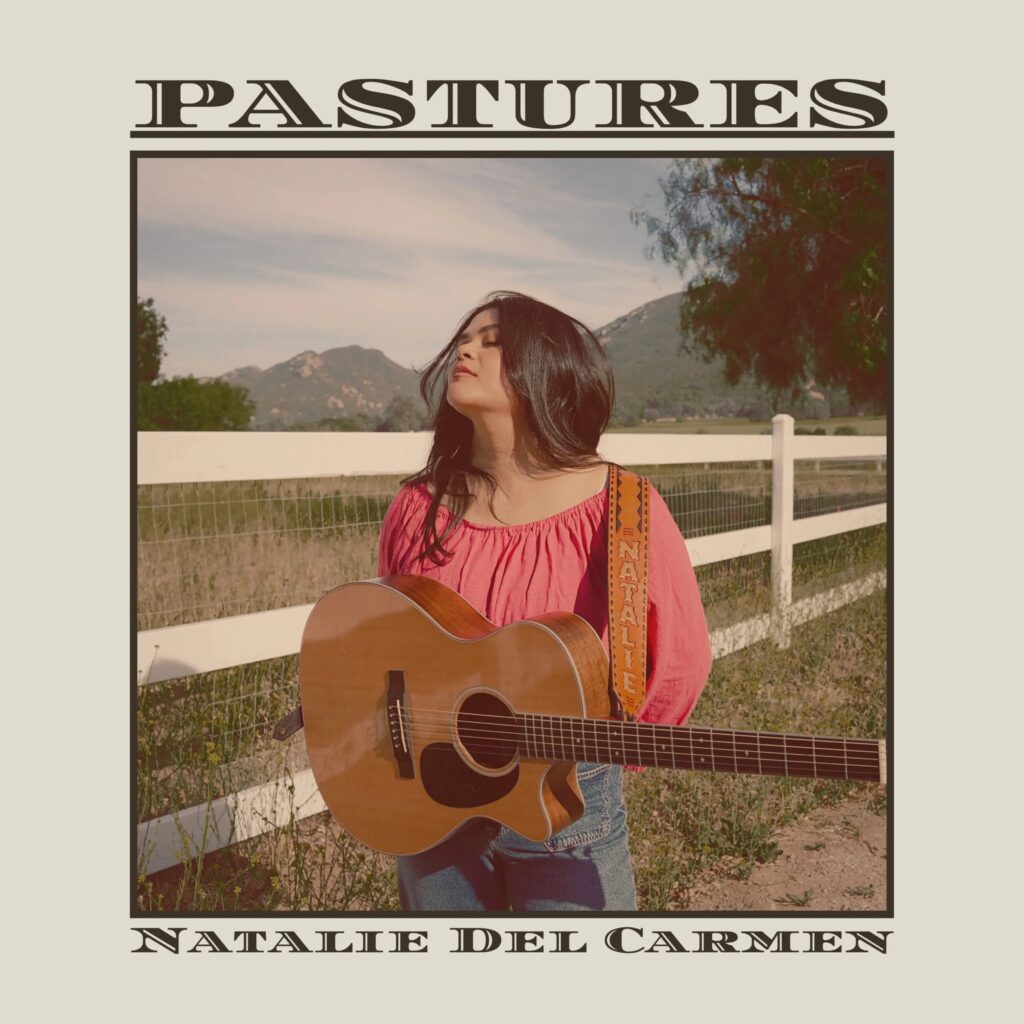
Natalie Del Carmen’s Pastures (Jan. 30, 2026) is nine songs and 34 minutes, which in streaming-era math qualifies as “blink and you missed a life lesson.”
The record is built on acoustic instruments, including a 1930s banjo she inherited from her grandfather, and it leans into a “poised and pastoral” mood that feels deliberately far from Southern California glare.
It was recorded with Brunjo, a Tennessee-based collective she connected with at Berklee, then reunited with in a studio outside Nashville for an eight-day tracking sprint. That matters because Pastures sounds like people in the same room, listening hard, choosing parts that leave space for the words.
And the words are the point. Reviewers have framed the album as a coming-of-age set focused on family, friendship, grief, and the pressure to “measure up,” delivered with vivid, memory-snapshot writing. On “Leanne,” she turns friendship into a small epic, down to the detail of a condolence gift after a pet dies, which is the kind of specificity that makes a song feel like a real person instead of a mood board.
Musically, she lets moments swell and then step back. “Plans Upon Plans” reportedly grows from quiet strumming into fiddle-and-banjo lift, then drops mood with organ weight before landing on acceptance. Even the titles carry that lived-in journal energy: “June, You’re On My Mind,” “Good Morning From Magnolia,” “Los Angeles,” “Heyday,” and the closer “Pressure in the Pastures.”
Then
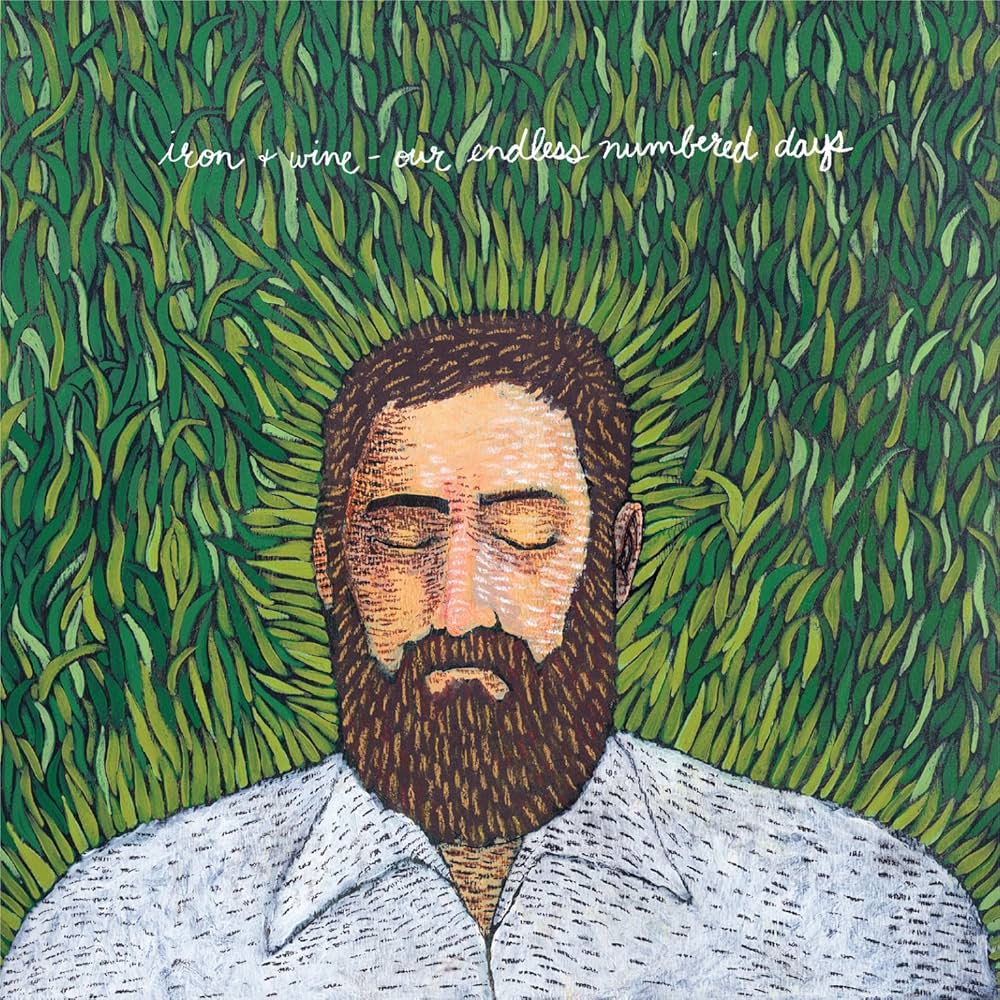
Iron & Wine’s Our Endless Numbered Days arrived in 2004, right when “intimate” became an indie virtue and not just something you whispered about on message boards.
It’s the record where Sam Beam’s soft-focus storytelling widened out from bedroom folk into something more arranged and communal, produced by Brian Deck and released through Sub Pop. The tracklist reads like a field guide to gentle devastation: “On Your Wings,” “Naked As We Came,” “Cinder and Smoke,” “Each Coming Night,” and “Passing Afternoon,” a song whose title alone sounds like it comes with a cup of tea and an existential shrug.
If Pastures is a young writer trying to name the weight of early adulthood without turning melodramatic, Our Endless Numbered Days is the template for how to do that: sing quietly, write sharply, and trust the listener to lean in.
Parallels
Small moments as the real plot
Del Carmen’s Pastures is explicitly invested in the “little details of everyday life,” turning grief, friendship, and self-pressure into scenes you can picture. Beam’s 2004 record operates the same way: not big declarations, but human-scale images that let time and tenderness do the heavy lifting.
The power of restraint
Both albums treat silence like an instrument. Del Carmen’s acoustic-first approach lets the writing breathe, with selective swells (fiddle, organ, strings) used to underline a turn in the story. Our Endless Numbered Days similarly wins by not over-explaining itself, a record that trusts minimalism to make emotion feel closer, not smaller.
Pastoral as a place you build, not a place you live
WNCW nailed it: Del Carmen isn’t reflecting her surroundings so much as world-building her own remote landscape, banjo and all. Iron & Wine did that in 2004 too, creating a headspace where the everyday becomes myth-sized, even when the volume stays low.
Breaks
Brightness vs. hush
Pastures gets described as hopeful and inviting, with an easygoing breeziness that can even flirt with pop-craft. Our Endless Numbered Days is warmer than its reputation, but its default setting is still shaded porch light.
Gen Z pressure has a different vocabulary
Del Carmen talks directly about expectations, timelines, and the stress of amounting to something, very 2020s, very honest. Beam’s record circles similar feelings, but tends to camouflage them in older folk-code: metaphor first, confession second.
Americana lineage vs. indie-folk canon
Del Carmen is threading herself into modern Americana while borrowing tools from folk-pop and country storytelling. Iron & Wine’s album is a cornerstone of indie folk’s early-2000s boom. The comparison is still fair because both rely on the same engine: quiet delivery, vivid writing, and arrangements that refuse to step on the words.
Liner Notes
If Our Endless Numbered Days taught a generation that you could make a “big” record without raising your voice, Pastures shows what happens when a newer songwriter applies that lesson to the specific anxieties of early adulthood now: grief that’s practical, ambition that’s exhausting, friendship that’s a lifeline.
Queue “Leanne” and then “Naked As We Came.” Listen for how both artists treat tenderness like a craft, not a vibe.
 About the author: Gainesville, FL area creative by day. Music is my muse. I host Twangville’s weekly Readers‘ Pick.